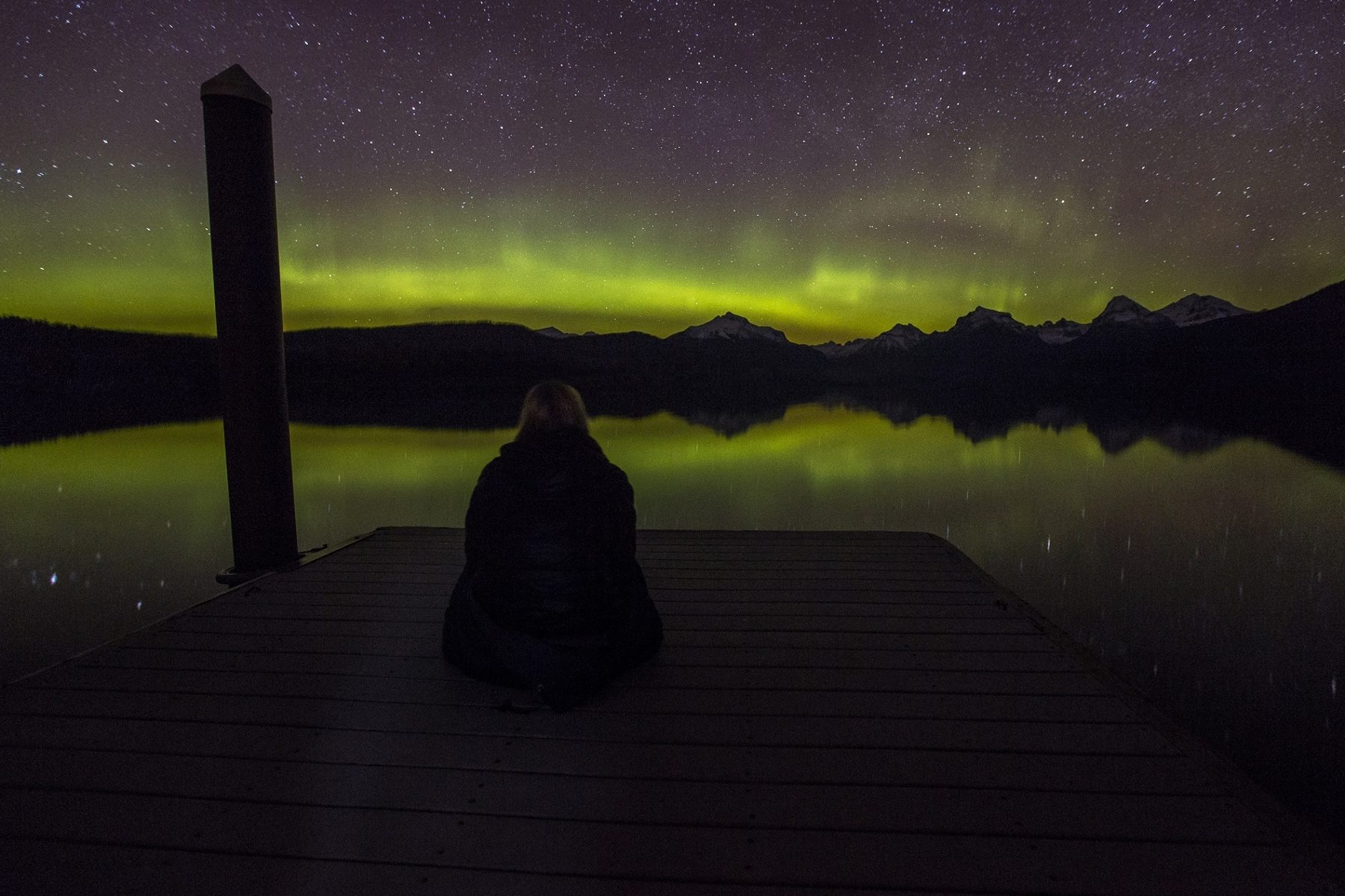
The aurora isn't rare. Being in the right place, on the right night, under a clear sky, when it's actually strong enough to see, is rare — and those are four separate conditions, not one. Solar activity runs on an eleven-year cycle, and we're currently past the peak of Solar Cycle 25, which means geomagnetic activity is elevated but not guaranteed on any single night.
The number that actually matters is the Kp-index, a 0-to-9 scale measuring geomagnetic disturbance. Above Kp5 and you're generally in business, even from lower-latitude viewing spots. Below Kp3, you likely need to be well inside the Arctic Circle and lucky. We watch Kp forecasts daily during a trip window, not just once when planning it, because the forecast genuinely shifts night to night.
Cloud cover is the second filter, and it's the one people underestimate. A strong geomagnetic storm under a fully overcast sky gets you nothing. This is why we build in flexibility to move between viewing locations on short notice — sometimes a two-hour drive is the difference between clear skies and cloud.
Then there's what we call the three-night rule: never build an aurora trip around a single night. Give it three consecutive nights in a good viewing window, and the odds of at least one clear, active night climb substantially — treating it as a single-shot event is the single most common mistake in aurora trip planning, and the easiest one to fix.